



Alligatoring and Surface Cracking
Repeated thermal expansion in Banning heat leaves a dry, cracked pattern on older coatings and modified bitumen, opening paths for water.

Elastomeric roof coating is a thick, flexible membrane applied over low-slope and flat roofs, and Banning homeowners with aging foam, modified bitumen, or metal roofs often need it once surface cracking or ponding appears. Summer heat and intense UV exposure in Banning cause roofing materials to expand, contract, and break down faster than many owners expect. Our crew starts with seam inspection and moisture checks, then applies primer and a reinforced base coat at a measured dry mil thickness for even coverage. Spring and fall 2026 dates are now being scheduled. Banning Painting Contractors Crew handles each step, from pressure washing to the final coverage check.
Roof Coating Service Overview
Elastomeric roof coating is the process of applying a flexible, reflective acrylic or silicone membrane over an existing roof surface, and at Banning Painting Contractors Crew it includes inspection, surface preparation, seam reinforcement, and full-coverage application across Banning properties. Preparation comes first. We pressure wash the roof, remove loose granules and failed coating, and seal open seams, fasteners, and flashing with polyester fabric embedded in base coat. Topcoats are then applied by roller or airless sprayer, with wet mil gauge readings taken to confirm consistent thickness. This work applies to residential homes, commercial buildings, and multi-unit properties with low-slope roofs. For 2026, we schedule application during mild weather so coatings cure properly before summer heat and winter rain.
- Signs You Need Roof Coating -
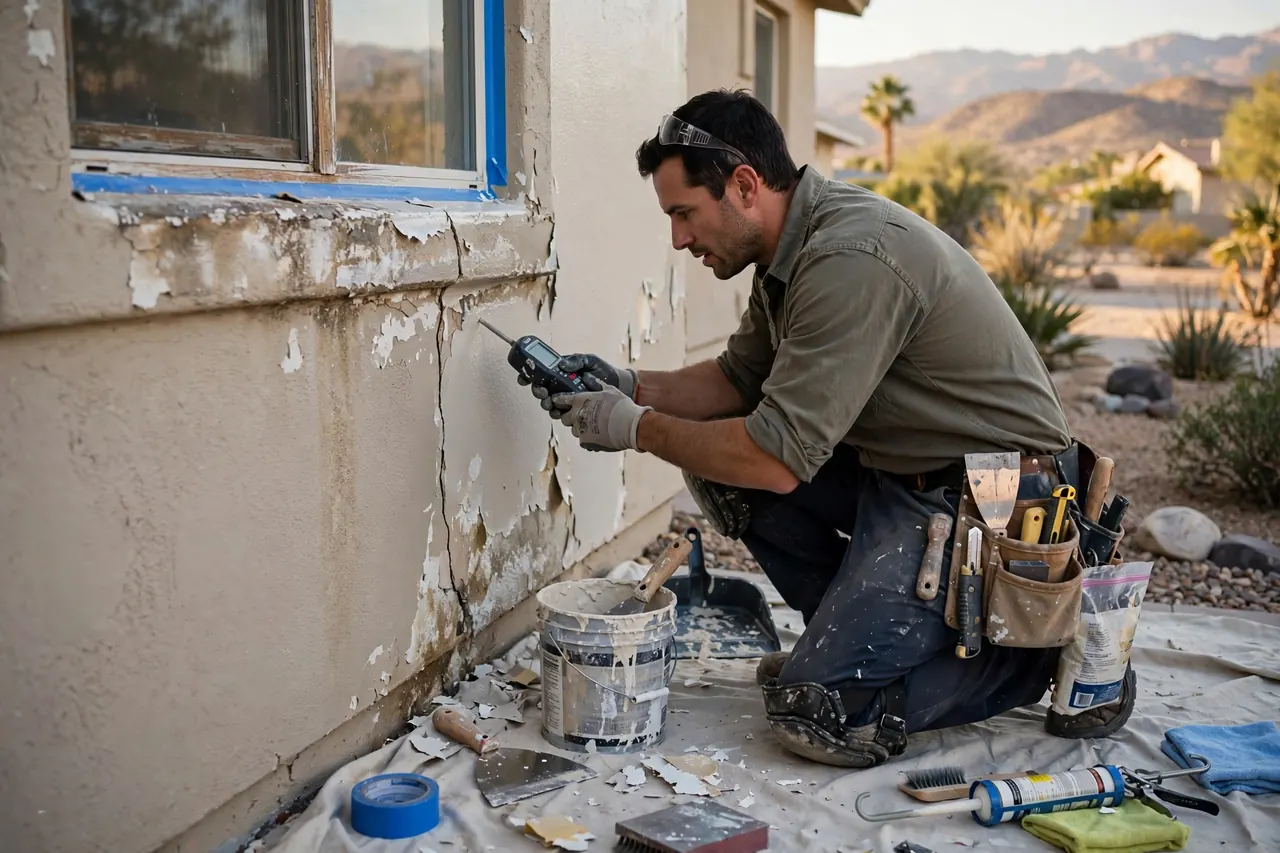
Ceiling stains, surface cracking, and ponding water usually mean a Banning roof needs elastomeric coating. UV degradation, thermal cycling, and failed seams let moisture reach the substrate. These signs worsen quickly. Inspecting in 2026 before summer heat lets a reflective membrane seal the surface before decking damage spreads.
Click Me to Call: 951-644-1730Repeated thermal expansion in Banning heat leaves a dry, cracked pattern on older coatings and modified bitumen, opening paths for water.
Water that remains on the roof for 48 hours after rain can soften the surface, trap moisture, and form blisters that eventually rupture.
Separated seams, loose fasteners, and worn flashing around vents allow drips and interior ceiling stains after storms.
Elastomeric Roof Coating FAQs
These 2026 answers cover elastomeric roof coating questions Banning homeowners ask most: scheduling around weather, what each application includes, roof preparation, pricing factors, and how local heat and wind affect coating performance.
Call Us: 951-644-1730Late spring and early fall are usually the best windows in Banning because surface temperatures are moderate and rain is unlikely. Elastomeric coatings need dry conditions and a cure period without dew or rainfall. We check the forecast and substrate temperature before confirming an application date.
A typical job includes a roof inspection, pressure washing, seam and penetration repair, primer where needed, and a base coat and topcoat applied to a measured dry film thickness. Flashing, vents, and drains get reinforcing fabric or sealant before the full coat goes down. A post-job walkthrough confirms coverage and finish.
Clear vehicles, patio furniture, and pets away from the roof perimeter and confirm we have safe ladder access. Close windows near the work area during pressure washing and spray application. We mask skylights, HVAC units, and exposed walls to control overspray.
Cost depends on roof square footage, substrate type, repair needs, and the required mil thickness of the coating system. Ponding areas, failed seams, or old coating removal add labor and materials. We provide free written estimates after measuring and inspecting the roof.
Banning’s intense summer UV, daily temperature swings, and Pass-area winds put steady stress on roofing, and a reflective elastomeric membrane helps by flexing with thermal movement and reflecting solar heat. Wind-blown dust must be fully washed off before application for proper adhesion. In 2026 we still recommend periodic inspections to catch chalking or thin spots early.
Elastomeric roof coating pricing in Banning depends primarily on roof square footage, substrate condition, and the required coating thickness, with most 2026 jobs priced after an on-site measurement. Roof size sets the base gallon count. The substrate, whether modified bitumen, foam, metal, or built-up roofing, determines primer selection and adhesion prep. Specified mil thickness changes how many coats are needed. Repairs to seams, flashing, and ponding areas add material and labor.
Access and removal work also matter. Steep or multi-level roofs need extra safety setup, and flaking prior coatings must be scraped before new elastomeric is applied. Exact pricing requires a site assessment, so we measure, photograph problem areas, and document repair scope first. Every Banning homeowner receives a free written estimate itemizing prep, repairs, and coating system details.
Elastomeric Roof Coating Cost Factors
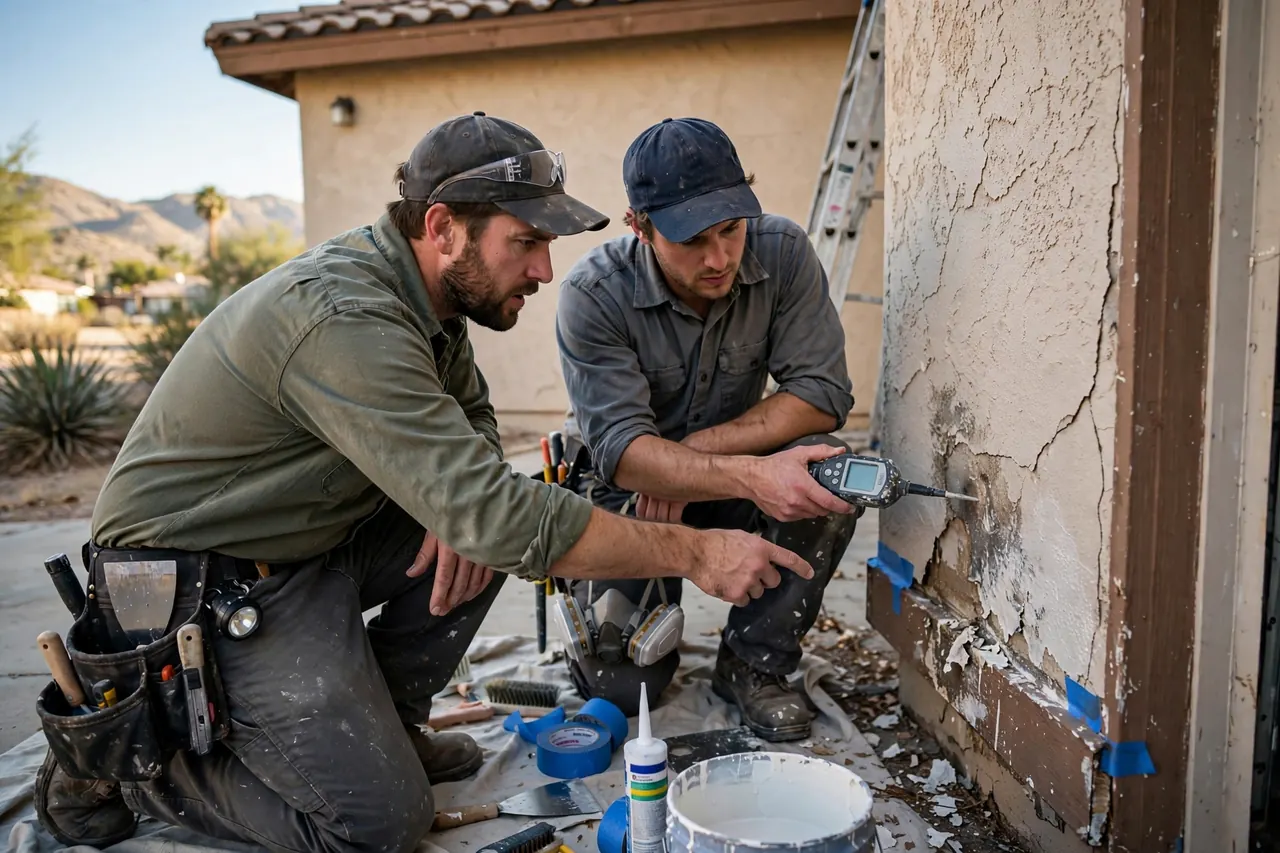
We inspect seams, flashing, drains, and penetrations on your Banning roof, measure square footage, and note ponding or blistering. Findings go into a written estimate. Nothing is guessed.
Pressure washing removes dust, chalking, and loose debris common in Banning’s windy conditions. Failed coating is scraped away. The roof must dry fully before work continues.
Cracked seams and penetrations receive reinforcing fabric and sealant. Primer is applied where the substrate requires it for adhesion. Each detail is checked before coating.
We apply the elastomeric base coat, then the topcoat, checking wet film thickness with a gauge to meet the specified mils. Coverage stays even. Edges get careful attention.
After curing, we inspect for thin spots, pinholes, and missed areas, then complete a post-job walkthrough with you. In 2026, every roof is documented with final photos.
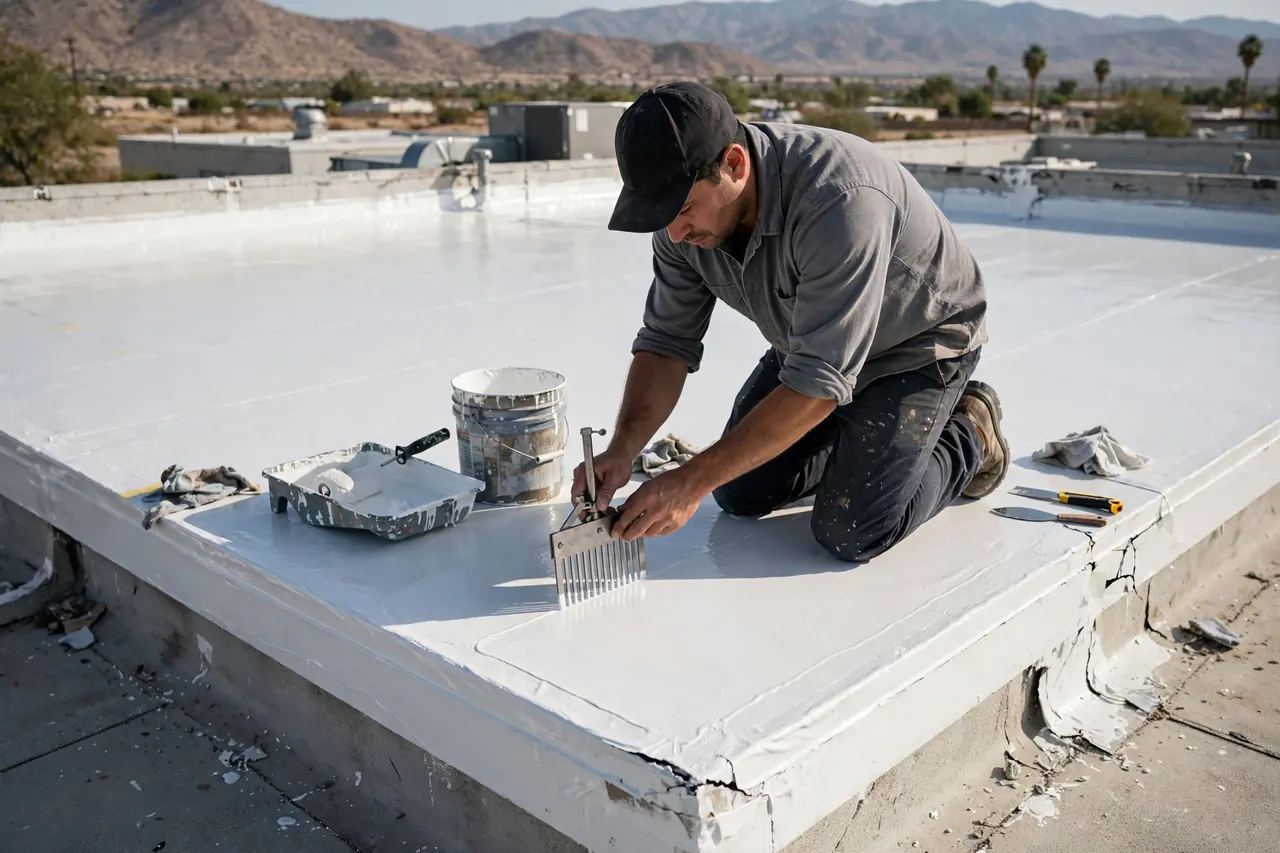
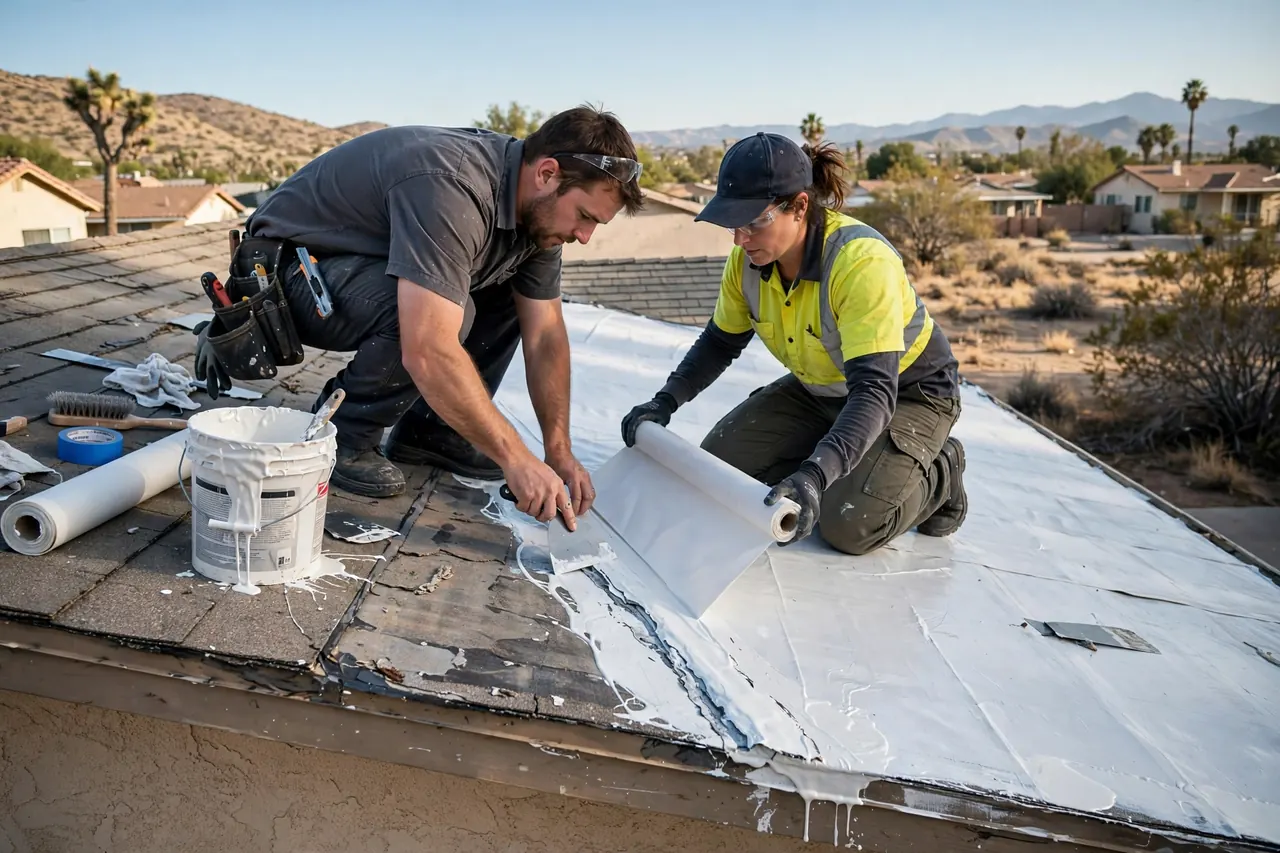
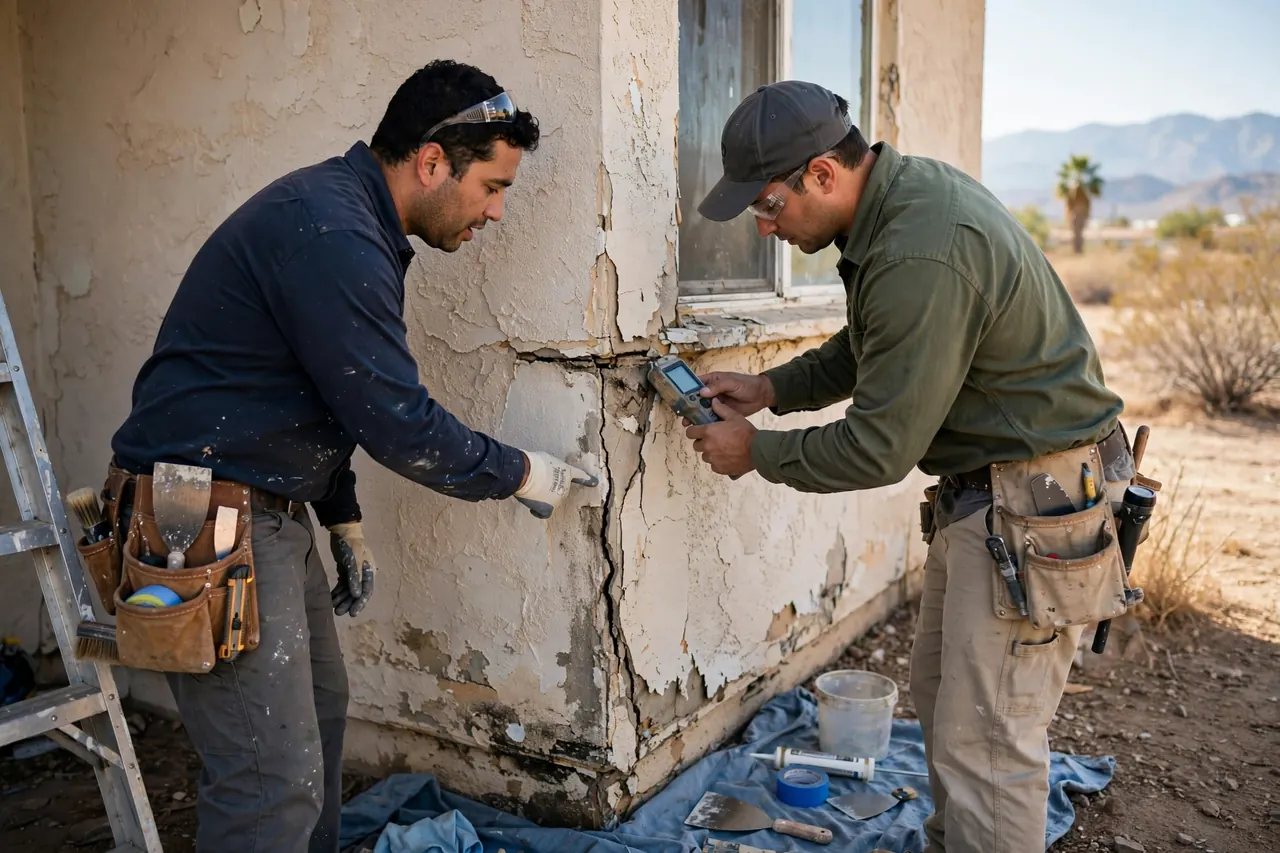
Banning Painting Contractors Crew applies elastomeric roof coating through an inspection-first process that identifies ponding water, seam separation, and failed flashing before any product touches the roof. Each project begins with a moisture check and a walk of the full roof surface, noting blistering, alligatored asphalt, cracked parapet caps, and loose fasteners that would undermine coating adhesion. Those findings go into a written estimate with photo documentation, so you can see exactly which areas need seam reinforcement with polyester fabric, which need primer, and why. Nothing is assumed. Throughout 2026, that same documented approach guides every flat and low-slope roof we coat in Banning.
Application follows a controlled sequence: pressure washing, drying time verification, primer where required, embedded fabric at seams and penetrations, then measured coats applied to a target wet-film thickness checked with a mil gauge. In Banning, intense summer UV and wide day-to-night temperature swings expand and contract roofing materials, so achieving full dry-mil coverage matters more than speed. After the final coat cures, a post-job walkthrough confirms coverage at drains, curbs, and HVAC stands, and a scheduled follow-up inspection checks for any early adhesion or drainage issues. Small problems get caught early. That keeps a minor seam concern from becoming interior ceiling damage later.
// Free Elastomeric Roof Coating Estimates //